What’s the Difference and Which Is Best for Your Business?
Auditing is a core part of any management system. The way you audit can shape the culture. This applies to working with ISO 9001, AS 9100, ISO 14001, ISO 45001 or any other standard. It can influence the performance and effectiveness of your organisation.
Two common approaches are standard‑based auditing and process‑based auditing. Both have value — but they serve different purposes, and choosing the right one can transform how your business operates.
This article breaks down the differences. It explains how to comply with ISO 19011:2018. It explores whether a process‑based approach is the best way to run your organisation.
What Is Standard‑Based Auditing?
Standard‑based auditing is the traditional method. The auditor works through the clauses of a standard one by one, checking whether the organisation meets each need.
✔️ Key Characteristics
- Audit follows the structure of the standard
- Questions are clause‑driven
- Evidence is collected to show conformity
- Often feels like a checklist exercise
✔️ Strengths
- Ensures full coverage of every requirement
- Good for new systems or inexperienced teams
- Easy to plan and execute
❌ Limitations
- Can feel disconnected from real operations
- Staff struggle to relate to clause‑based questions
- Doesn’t always reveal process effectiveness
- Can encourage documentation for the sake of compliance
What Is Process‑Based Auditing?
Process‑based auditing focuses on how work actually flows through the organisation. Instead of following the standard, the auditor follows the process from inputs to outputs. This includes interactions, risks, controls, and performance.
✔️ Key Characteristics
- Audit follows real operational processes
- Questions are practical and activity‑based
- Evidence is gathered through observation, interviews, and outputs
- The standard is used in the background, not as the structure
✔️ Strengths
- More natural for staff
- Reveals real‑world risks and inefficiencies
- Shows how processes link together
- Supports continuous improvement
- Aligns with modern ISO standards
❌ Limitations
- Requires more auditor skill
- Harder to carry out if processes are unclear or undocumented
How to Comply with ISO 19011:2018 (Audit Guidelines)
ISO 19011 provides guidance on how to audit management systems effectively. It applies to internal audits, supplier audits, and external audits.
Here’s what compliance looks like in practice.
A. Follow the Principles of Auditing
ISO 19011 sets out seven principles:
- Integrity
- Fair presentation
- Due professional care
- Confidentiality
- Independence
- Evidence‑based approach
- Risk‑based thinking
These principles should guide every audit, regardless of method.
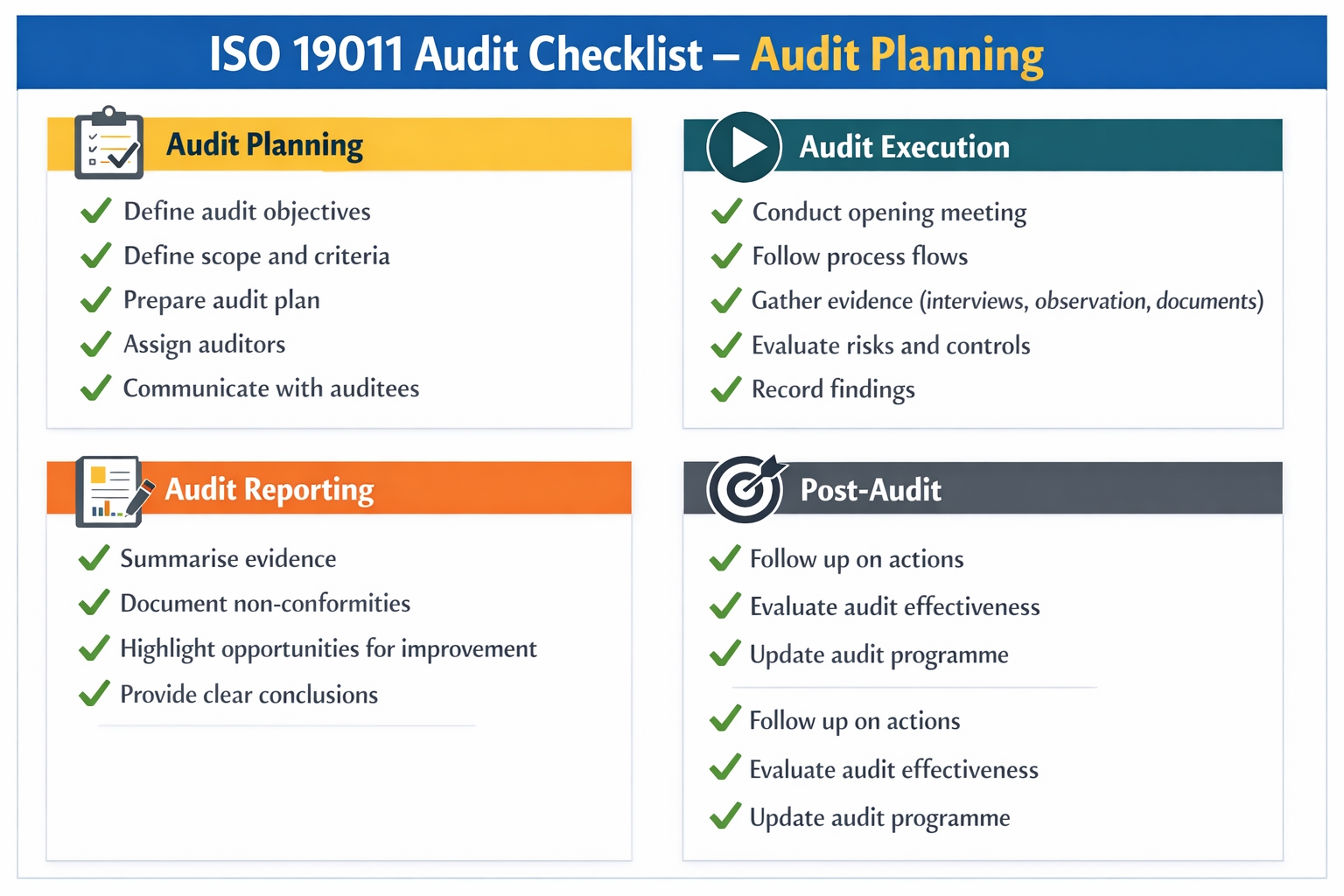
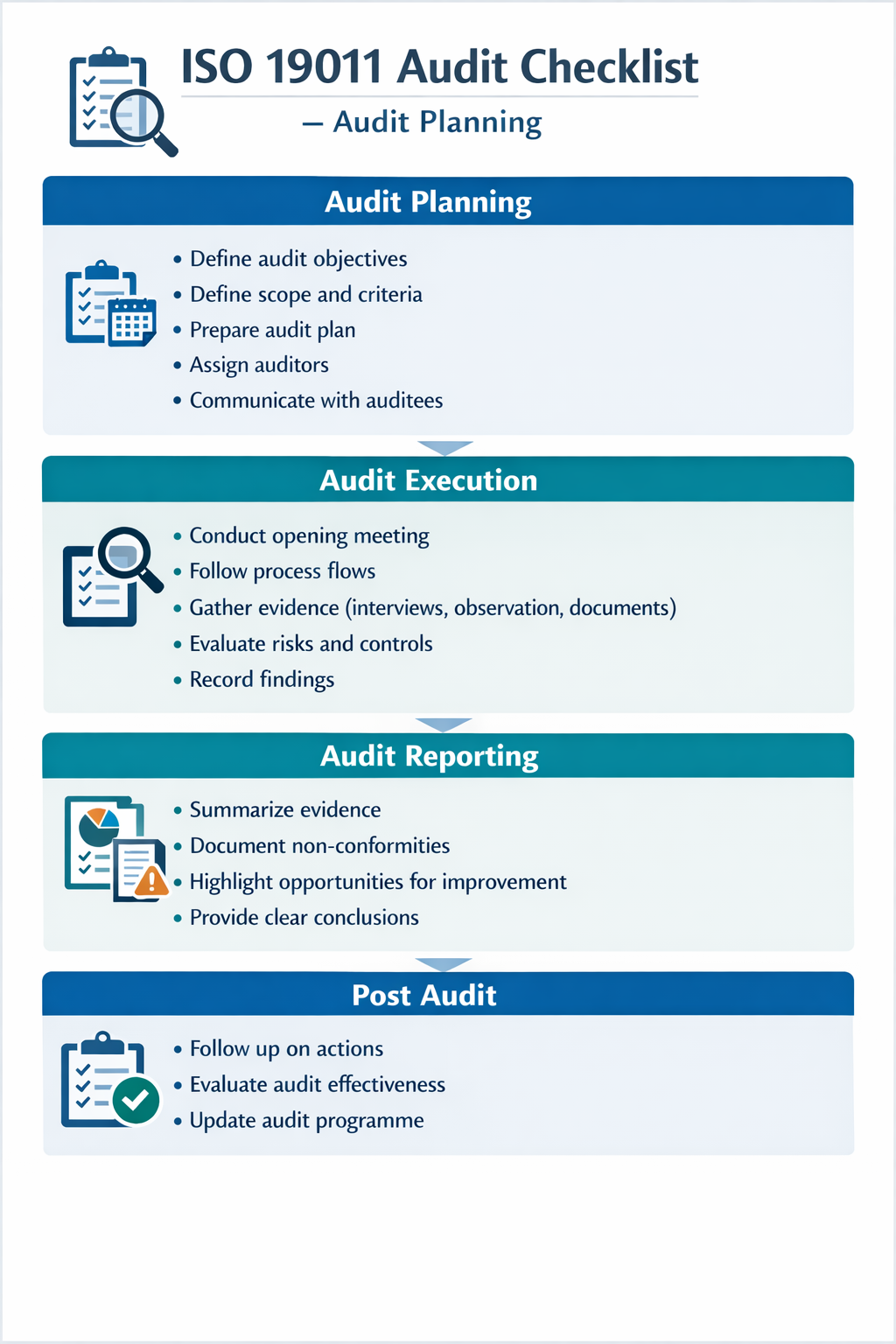
B. Plan the Audit Properly
ISO 19011 requires:
- Clear audit objectives
- Defined scope and criteria
- An audit plan
- Auditor assignments
- Communication with auditees
Even a process‑based audit needs structure.
C. Conduct the Audit Using a Risk‑Based Approach
This is where process‑based auditing excels. ISO 19011 expects auditors to:
- Focus on high‑risk areas
- Follow process flows
- Understand interactions between processes
- Evaluate effectiveness, not just compliance.
D. Report Clearly and Objectively
Audit reports should include:
- What was audited
- Evidence found
- Conformities
- Non-conformities
- Opportunities for improvement
- Audit conclusions
ISO 19011 emphasises clarity and value.
E. Ensure Auditor Competence
Auditors must have:
- Knowledge of the standard
- Understanding of processes
- Audit skills
- Communication skills
- Ability to evaluate risk and effectiveness
This is often the biggest gap in organisations.
Is a Process‑Based Approach the Best Way to Work?
In most modern organisations — yes.
Why?
- It aligns with ISO standards
- ISO 9001, 14001, 45001 and others are built on the process approach.
- It reflects how work actually happens
- People don’t work in clauses — they work in processes.
- It improves performance, not just compliance
- Process‑based audits reveal bottlenecks, waste, unclear responsibilities, and training gaps.
- It engages staff
- Operators can explain what they do far more easily than explaining a clause.
- It builds a stronger, more resilient system
- When processes are understood and improved, the whole organisation becomes more stable.
Which Approach Should You Use?
| Approach | Best For | Limitation |
|---|---|---|
| Standard‑Based | New systems; inexperienced teams; ensuring full clause coverage | Tick‑box feel; less operational insight |
| Process‑Based | Mature systems; improvement culture; real‑world effectiveness | Requires skilled auditors |
The best organisations use a hybrid:
- Process‑based as the main method
- Standard‑based as a safety net This gives you the best of both worlds.
 What-News
Leave a comment